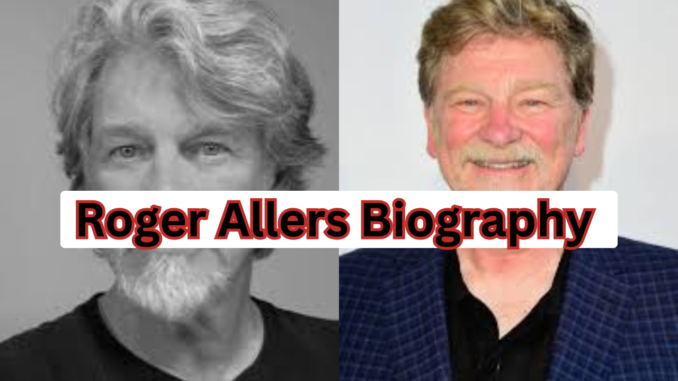
Biography
Roger Allers was born on June 29, 1949, in Rye, New York, USA, but he grew up far from the busy streets of the East Coast. His childhood unfolded in Scottsdale, Arizona, a quieter place that gave him room to imagine, observe, and dream. And dream he did.
At just five years old, Roger saw Disney’s Peter Pan. That single film lit a spark that never went out. While other children simply enjoyed cartoons, Roger studied them. He wondered: How do drawings move? Who makes these worlds? Could I ever be part of this magic? That curiosity was like planting a seed that would take decades to fully bloom.
As a teenager, Roger’s dream briefly shook when he learned that Walt Disney died in 1966. For a moment, it felt as if the door to his dream had closed. But instead of giving up, he adapted. Like a river finding a new path, he continued toward art, storytelling, and animation — even if the road looked uncertain.
He later earned a Bachelor of Fine Arts (BFA) from Arizona State University, grounding his imagination with technical skill. His hunger for life and experience didn’t stop there. After graduation, Roger spent time traveling in Greece, even living in a cave for a period. That chapter of his life wasn’t about comfort — it was about perspective, creativity, and understanding stories older than time.
That mix of formal education, life experience, and raw curiosity shaped Roger Allers into more than just an animator. It shaped him into a storyteller.
Advertisements
Career
Roger Allers’ career stretched from 1974 to 2026, more than five decades of creative work. That alone tells you something important: this was not a man chasing trends. This was a man devoted to craft.
Early Career and Animation Roots
Roger’s professional journey began with Lisberger Studios, where he worked on beloved children’s programs like Sesame Street and The Electric Company. These weren’t blockbuster films, but they taught him rhythm, timing, and emotional clarity — skills that would later define his greatest work.
In the late 1970s and early 1980s, Roger worked on animated features like Animalympics and Rock & Rule. He also contributed to Tron (1982), one of the most visually daring films of its time. Working on Tron was like stepping into the future — it showed Roger that animation could evolve, experiment, and push boundaries.
Later, he moved to Tokyo, where he served as an animation director on Little Nemo: Adventures in Slumberland. Living and working in Japan deeply influenced his respect for animation as an art form, not just entertainment.
Disney Years and The Lion King
Roger’s life changed when he joined Walt Disney Animation Studios in the mid-1980s. He worked as a storyboard artist on Oliver & Company, The Little Mermaid, The Rescuers Down Under, and The Prince and the Pauper. Each project sharpened his storytelling instincts.
Then came Beauty and the Beast (1991), where Roger served as Head of Story. That role wasn’t about drawing alone — it was about shaping emotion, pacing, and character arcs. And Disney noticed.
Shortly after, Roger became a co-director of what would become The Lion King (1994), alongside Rob Minkoff. The project started rocky. The story wasn’t working. Creative disagreements surfaced. Some team members left.
But here’s where Roger Allers’ quiet strength showed. Instead of forcing ideas, he collaborated. He listened. He rebuilt the story from the ground up with his team. The result? One of the most successful animated films of all time — the highest-grossing traditionally animated film ever.
The Lion King wasn’t just a movie. It became a modern myth, touching on loss, responsibility, identity, and growth. Roger didn’t just help make a film — he helped create a cultural landmark.
Broadway, Sony, and Later Work
Roger didn’t stop after Disney. He co-wrote the Broadway adaptation of The Lion King, which went on to win Best Musical at the Tony Awards. That stage version became one of the most successful Broadway shows in history.
Later, he directed Sony Pictures Animation’s first feature film, Open Season (2006), proving he could lead outside Disney’s walls. He also directed the animated adaptation of Kahlil Gibran’s The Prophet — a deeply spiritual, artistic project that reflected his mature creative voice.
Roger’s career was like a long conversation with art. He never shouted. He never rushed. He simply kept telling stories, one frame at a time.
Personal Life
Away from studios and storyboards, Roger Allers lived a life rooted in creativity and family.
He married Leslee Hackenson in 1977, during the early years of his career. Together, they raised two children, a daughter named Leah and a son named Aidan. Roger often spoke of family as his emotional anchor, especially during the intense production periods of major films.
Their marriage lasted over four decades, a rare thing in an industry known for instability. However, in 2020, Roger and Leslee divorced. Despite the separation, there is no public record of bitterness or scandal — only the quiet understanding that some chapters end so others can begin.
Roger was known among colleagues as thoughtful, humble, and deeply respectful of artists at every level. He wasn’t the loudest voice in the room, but when he spoke, people listened.
Age
Roger Allers was born on June 29, 1949.
He passed away on January 17, 2026, at the age of 76.
Those 76 years were filled with imagination, perseverance, and impact. Like a long animated feature, his life had slow moments, dramatic turns, and unforgettable highlights — all stitched together by passion.
Wife
Roger Allers’ wife for most of his adult life was Leslee Hackenson.
They married in 1977 and divorced in 2020. Together, they had two children and shared decades of life through career highs, creative challenges, and personal growth.
After the divorce, Roger kept his private life largely out of the public eye, choosing peace over publicity.
Cause of Death
Roger Allers died on January 17, 2026, in Santa Monica, California.
As of confirmed public records, the specific cause of death was not publicly disclosed. What is known is that he passed away at age 76 after a long, active life dedicated to storytelling and animation.
Sometimes, the absence of details reminds us of something important: a person’s legacy is not defined by how they died, but by how they lived.
Conclusion
Roger Allers didn’t chase fame, fame followed his work. He didn’t demand attention his stories earned it. From a child inspired by Peter Pan to a co-creator of The Lion King, his life was proof that quiet passion can create thunderous impact.
He leaves behind films that shaped generations, a Broadway legacy that continues nightly, and a creative blueprint for storytellers who believe that animation is not “just for kids,” but for the human heart.
Roger Allers is gone, but his stories still breathe. And in animation, that’s a kind of immortality.
FAQs
Who was Roger Allers?
Roger Allers was an American animator, director, writer, and storyboard artist best known for co-directing Disney’s The Lion King.
How old was Roger Allers when he died?
He was 76 years old when he passed away in January 2026.
Was Roger Allers married?
Yes. He was married to Leslee Hackenson from 1977 until their divorce in 2020.
What movies did Roger Allers work on?
His major works include The Lion King, Beauty and the Beast, Open Season, and The Prophet.
What was Roger Allers’ cause of death?
The official cause of death was not publicly disclosed.

Peter Charles is a journalist and writer who covers battery-material recycling, urban mining, and the growing use of microreactors in industry. With 10 years of experience in industrial reporting, he explains new technologies and industry changes in clear, simple terms. He holds both a BSc and an MSc in Electrical Engineering, which gives him the technical knowledge to report accurately and insightfully on these topics.
Leave a Reply