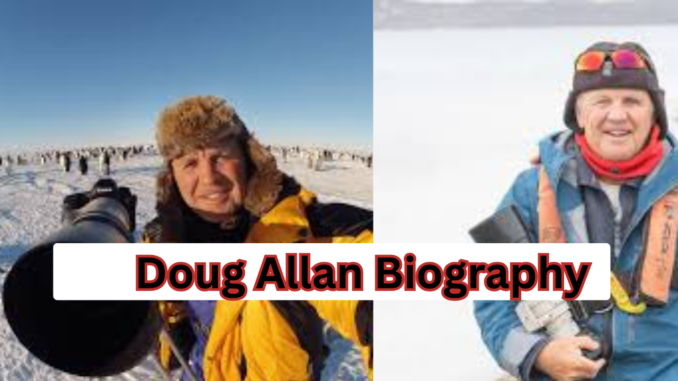
Biography
Doug Allan, whose full name was Douglas George Allan, was born on July 17, 1951, in Dunfermline, Scotland. He grew up in a creative and curious environment that would later shape his extraordinary career. His father was a photographer and photojournalist who owned a photography shop, and this early exposure to cameras and storytelling played a major role in shaping Allan’s future.
Advertisements
From a young age, Doug Allan developed a deep love for nature, especially the ocean. He became an enthusiastic snorkeller and underwater diver during his childhood. These early experiences sparked a lifelong passion for the natural world, particularly marine life. Instead of choosing a conventional career path, Allan followed his curiosity and enrolled at the University of Stirling, where he studied marine biology.
After completing his studies, Allan began his professional journey in a rather unique way. His first job was as a pearl diver, working alongside Scotland’s last traditional pearl hunter. This role gave him hands-on experience in underwater exploration and strengthened his connection to the natural world.
He later joined the British Antarctic Survey, where he spent eight years working in Antarctica as a research diver, scientist, and photographer. This period was crucial in shaping his expertise in extreme environments. Living and working in one of the harshest climates on Earth taught him resilience, patience, and technical skill—qualities that would define his career.
Doug Allan’s life was a perfect blend of science, adventure, and storytelling. He turned his passion for nature into a lifelong mission to capture the beauty and fragility of the planet.
Career
Doug Allan’s career is widely regarded as one of the most remarkable in the world of wildlife filmmaking. In 1985, he made a bold decision to become a full-time cinematographer. This move marked the beginning of a career that would influence how millions of people see the natural world.
He became a principal cameraman for the BBC, contributing to some of the most iconic wildlife documentaries ever produced. His work focused largely on extreme environments, especially polar regions and underwater ecosystems. Allan had a unique ability to film in places where few people could even survive, let alone capture breathtaking footage.
Some of the most notable projects he worked on include Life in the Freezer, The Blue Planet, Planet Earth, and Frozen Planet. These documentaries are considered masterpieces of natural history filmmaking. Through his lens, viewers were able to witness the beauty of icy landscapes, deep oceans, and rare wildlife in ways never seen before.
One of his greatest achievements came with The Blue Planet, which earned him an Emmy Award for Outstanding Cinematography in 2002. He later won another Emmy in 2007 for his work on Planet Earth. In total, Doug Allan won eight Emmy Awards, a remarkable achievement that highlights his excellence in cinematography.
In addition to his Emmy wins, he also received multiple awards from the British Academy of Film and Television Arts. His work was consistently recognized for its technical brilliance and emotional impact. In 2017, he received a special award for Outstanding Contribution to Craft, honoring his lifetime achievements.
Doug Allan was not just a cameraman; he was also a storyteller. He frequently gave lectures and talks, sharing his experiences and inspiring others to care about the environment. His ability to connect with audiences made him a respected voice in both the scientific and creative communities.
Throughout his career, Allan pushed the limits of what was possible in wildlife filmmaking. Whether diving under ice or filming in freezing winds, he remained committed to capturing the truth and beauty of nature.
Personal Life
Despite his global recognition, Doug Allan lived a relatively private and humble life. He was known for his calm personality, deep curiosity, and strong respect for nature. Unlike many public figures, he preferred to let his work speak for itself.
His personal life was closely connected to his professional passion. He spent much of his time exploring remote locations, often in challenging conditions. These experiences shaped his outlook on life, making him deeply aware of the importance of environmental conservation.
Doug Allan believed that nature had the power to teach and inspire. One of his most memorable reflections came during an appearance on a radio program, where he described the feeling of gaining the trust of a wild animal as something truly special. This simple yet powerful idea reflects his deep connection to the natural world.
Although he faced many dangers in his career—extreme cold, unpredictable wildlife, and harsh terrains—he approached every challenge with determination and respect. His personal philosophy was rooted in patience, observation, and understanding.
He also valued education and sharing knowledge. Through his talks and public appearances, he encouraged people to appreciate nature and take responsibility for protecting it. His personal life may not have been widely documented, but his values were clearly reflected in his work.
Age
Doug Allan lived a long and impactful life. He was born on July 17, 1951, and passed away on April 8, 2026. At the time of his death, he was 74 years old.
His life spanned over seven decades, during which he witnessed major changes in both technology and environmental awareness. From early underwater photography to advanced digital cinematography, Allan adapted to new tools while maintaining his unique storytelling style.
Even in his later years, he remained active and passionate about exploration. His age never limited his curiosity or willingness to take on new challenges.
Cause of Death
Doug Allan died on April 8, 2026, during a climbing trip in Pokhara, Nepal. His death came as a shock to many, as he was still actively exploring and engaging with the natural world.
While the exact medical details were not widely disclosed, it is known that he passed away during this adventurous journey. His death reflects the kind of life he lived—one filled with exploration, courage, and a constant desire to experience the world.
His passing was deeply felt across the global filmmaking and environmental communities. Many paid tribute to his contributions, remembering him as a pioneer who brought the wonders of nature into people’s homes.
Family
Doug Allan was born into a supportive and creative family. He had a twin brother, and together they grew up in Dunfermline, Scotland. Their father played a significant role in shaping Allan’s early interest in photography.
Although detailed information about his immediate family, such as a spouse or children, is not widely available, it is clear that his upbringing had a lasting impact on his career. His father’s photography business introduced him to visual storytelling at an early age.
In many ways, Allan’s “family” extended beyond blood relations. He worked closely with teams of filmmakers, scientists, and explorers who shared his passion for nature. These collaborations formed strong bonds and contributed to his success.
His legacy continues through the countless people he inspired, including aspiring filmmakers and environmentalists around the world.
Conclusion
Doug Allan’s life was a powerful example of passion, dedication, and exploration. From his early days as a young diver in Scotland to becoming one of the world’s most respected wildlife cameramen, he never lost his sense of wonder.
His work with the BBC and his contributions to groundbreaking documentaries changed how people see the natural world. He brought remote and extreme environments into living rooms across the globe, helping audiences understand the beauty and importance of nature.
Even after his passing, his legacy lives on through his films, awards, and the inspiration he provided to others. Doug Allan was not just a cameraman—he was a storyteller, an explorer, and a guardian of nature’s most precious moments.
FAQs
Who was Doug Allan?
Doug Allan was a Scottish wildlife cameraman and photographer known for filming in extreme environments, especially polar regions and underwater.
What documentaries did Doug Allan work on?
He worked on major BBC productions such as The Blue Planet, Planet Earth, Frozen Planet, and Life in the Freezer.
How old was Doug Allan when he died?
He was 74 years old at the time of his death in 2026.
What was Doug Allan’s cause of death?
He died during a climbing trip in Nepal.
What is Doug Allan famous for?
He is famous for his award-winning wildlife cinematography and his work in capturing some of the most extreme environments on Earth.

Peter Charles is a journalist and writer who covers battery-material recycling, urban mining, and the growing use of microreactors in industry. With 10 years of experience in industrial reporting, he explains new technologies and industry changes in clear, simple terms. He holds both a BSc and an MSc in Electrical Engineering, which gives him the technical knowledge to report accurately and insightfully on these topics.