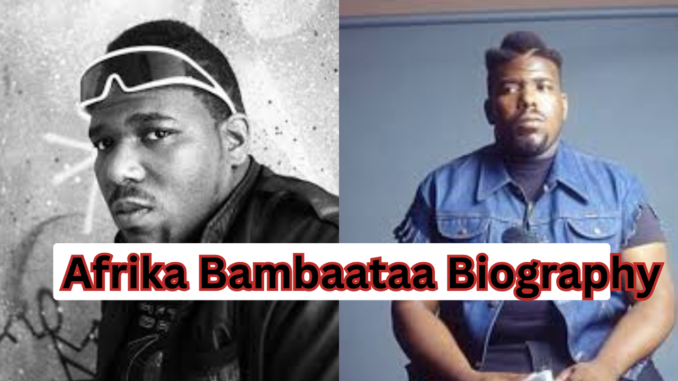
Biography
Afrika Bambaataa, born Lance Taylor on April 17, 1957, in The Bronx, New York City, United States, was one of the most influential pioneers in the history of hip-hop. Growing up in the Bronx, a place known for both its cultural energy and social struggles, he witnessed firsthand the challenges of urban life. Yet, instead of being defined by those struggles, he chose to transform them into something powerful—music, culture, and unity.
Advertisements
Raised in the Bronx River Projects, Bambaataa was deeply influenced by his environment. His mother exposed him to a wide range of music, from soul to funk and beyond. This early musical exposure helped shape his creative mind. At the same time, he was involved with the Black Spades, one of the most prominent street gangs in the Bronx, where he rose to a leadership position. However, a turning point came when he won an essay contest that took him to Africa. That journey changed his perspective completely. He returned with a new vision—one centered on peace, unity, and cultural expression.
After this transformation, he left behind gang life and focused on building something positive. He adopted the name Afrika Bambaataa, inspired by African history and leadership, and began creating a movement that would later influence millions around the world. His life story is not just about music—it is about transformation, leadership, and cultural impact.
Career
Afrika Bambaataa’s career is a cornerstone of hip-hop history. He is widely recognized as one of the founding figures of the culture, alongside pioneers like DJ Kool Herc. Inspired by early block parties and the emerging DJ scene, Bambaataa began hosting his own parties in the South Bronx during the 1970s. These gatherings were more than just entertainment—they were safe spaces where young people could come together, express themselves, and escape violence.
One of his greatest contributions was the creation of the Universal Zulu Nation. This organization brought together DJs, rappers, dancers, and graffiti artists under a shared vision of peace, unity, love, and having fun. Through this movement, Bambaataa helped turn hip-hop into a global cultural force.
His musical career reached new heights in the early 1980s. In 1982, he released the groundbreaking track “Planet Rock,” a song that changed the direction of music. By blending electronic sounds with hip-hop beats, he introduced the world to electro-funk. The track was heavily influenced by the German electronic group Kraftwerk, and it opened the door for future genres like electronic dance music and techno.
“Planet Rock” became a massive hit and remains one of the most important songs in music history. It showed that hip-hop could evolve beyond traditional sounds and embrace technology. Bambaataa continued to release influential tracks such as “Looking for the Perfect Beat” and “Renegades of Funk,” further solidifying his place as a musical innovator.
Beyond music production, he played a major role in spreading hip-hop globally. He participated in international tours, bringing the culture to Europe and beyond. His efforts helped inspire artists worldwide, including influential figures like MC Solaar.
Throughout his career, Bambaataa also collaborated with major artists and contributed to social causes. He worked with James Brown on the track “Unity,” symbolically connecting generations of Black music. He was also involved in anti-violence campaigns, using music as a tool for social change.
However, his career was not without controversy. In 2016, multiple allegations of sexual abuse surfaced, leading him to step down from his leadership role in the Universal Zulu Nation. These allegations significantly affected his legacy and public image.
Personal Life
Afrika Bambaataa’s personal life was deeply tied to his public identity. He was known as a private individual who focused more on his work and cultural mission than on sharing personal details. Despite his global fame, he maintained a certain level of mystery around his personal relationships and daily life.
He spent much of his life advocating for peace and unity, values that came from his early experiences in the Bronx. His transformation from a gang leader to a cultural pioneer is one of the most compelling aspects of his story. He believed that music could save lives, and many people credit him with helping to reduce violence in his community by offering young people a creative outlet.
However, his personal life became the subject of serious controversy later on. Allegations of misconduct and abuse, some dating back decades, brought intense scrutiny. While he denied these claims, they led to legal battles and a significant shift in how he was viewed by the public.
Despite these challenges, his influence on music and culture remains undeniable. His personal story is complex, reflecting both groundbreaking achievements and difficult controversies.
Age
Afrika Bambaataa was born on April 17, 1957, and passed away on April 9, 2026. He was 68 years old at the time of his death, just days before his 69th birthday.
His life spanned nearly seven decades, during which he witnessed and helped shape major cultural changes. From the early days of hip-hop in the Bronx to its global expansion, Bambaataa was there at every stage, playing a key role in its development.
Cause of Death
Afrika Bambaataa died on April 9, 2026, in Pennsylvania, United States. The cause of his death was prostate cancer.
His passing marked the end of an era in hip-hop history. As one of the culture’s founding figures, his death was felt deeply within the music community. Many artists, fans, and historians reflected on his contributions and the lasting impact he had on the industry.
While his legacy is complicated by controversies, his role in shaping hip-hop and electronic music remains significant.
Family
Afrika Bambaataa was born into a family of Caribbean descent, with roots in Jamaica and Barbados. His upbringing in a culturally rich household played a key role in shaping his musical tastes and worldview.
Details about his immediate family, including spouses or children, were not widely publicized. He kept much of his family life private, choosing instead to focus on his public mission and cultural work.
However, in a broader sense, he considered the members of the Universal Zulu Nation as part of his extended family. This community included artists, dancers, and activists who shared his vision of using hip-hop as a force for good.
Conclusion
Afrika Bambaataa’s life is a powerful story of influence, innovation, and complexity. From his early days in the Bronx to becoming a global cultural icon, he helped shape the foundation of hip-hop and electronic music. His work brought people together, inspired creativity, and gave a voice to a generation.
At the same time, his legacy is not without controversy. The allegations and legal issues that emerged later in his life have added layers of debate to how he is remembered. Still, his contributions to music and culture cannot be ignored.
He remains one of the most important figures in hip-hop history—a pioneer who changed the sound of music and the direction of a global movement.
FAQs
Who is Afrika Bambaataa?
Afrika Bambaataa was an American DJ, rapper, and producer known as one of the founding pioneers of hip-hop culture.
What is Afrika Bambaataa famous for?
He is famous for creating “Planet Rock,” founding the Universal Zulu Nation, and helping spread hip-hop culture worldwide.
How old was Afrika Bambaataa when he died?
He was 68 years old at the time of his death in 2026.
What was the cause of Afrika Bambaataa’s death?
He died from prostate cancer.
What is Afrika Bambaataa famous for?
Afrika Bambaataa is famous for his role in shaping hip-hop culture and for his hit song “Planet Rock,” which helped define electro-funk music.
What is Afrika Bambaataa’s connection to the Zulu Nation?
He founded the Universal Zulu Nation, a group that promoted peace, unity, and hip-hop culture worldwide.
What were the allegations against Afrika Bambaataa?
He faced multiple allegations of sexual abuse starting in 2016, which led to his resignation from leadership roles.
What is Afrika Bambaataa’s real name?
His real name was Lance Taylor.

Peter Charles is a journalist and writer who covers battery-material recycling, urban mining, and the growing use of microreactors in industry. With 10 years of experience in industrial reporting, he explains new technologies and industry changes in clear, simple terms. He holds both a BSc and an MSc in Electrical Engineering, which gives him the technical knowledge to report accurately and insightfully on these topics.