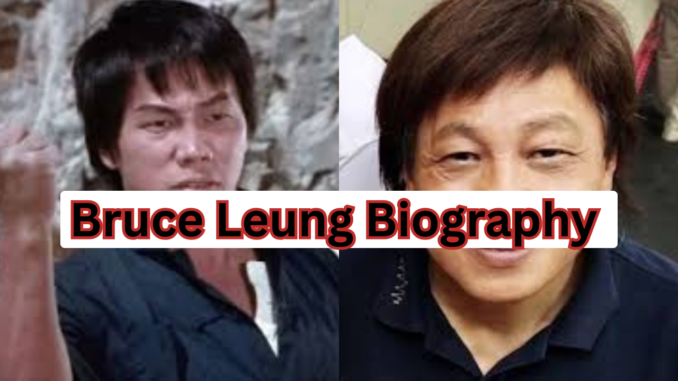
Biography
Bruce Leung was born Leung Choi-sang on 28 April 1948 in British Hong Kong. He came from a family steeped in martial arts and performance. From a very young age, Bruce was exposed to traditional martial arts training from his father through the Cantonese opera, where movement, discipline, and stage presence were part of daily life.
Advertisements
Growing up, he wasn’t just another kid in the crowd. He had a spark that made people take notice. Martial arts wasn’t merely a hobby for him — it was his identity. He trained in multiple disciplines including Goju-ryu Karate and Wing Chun, which helped him develop the kind of physical control and intensity that would later define his film performances.
Bruce’s life was deeply rooted in Hong Kong’s vibrant martial arts culture, which was exploding onto the global stage in the 1960s and 1970s. Many young fighters aspired to film careers, and Bruce was no different but he had something extra: a natural flair that would shine once he stepped in front of the camera.
Career
Bruce Leung’s career spanned decades, starting as a martial arts performer and stuntman before transitioning into starring roles that made him a household name in action cinema.
Early Martial Arts Films
In the 1970s, Bruce began working in Hong Kong cinema, a world buzzing with kung fu stars and film pioneers. His first big break came through work as a stunt performer and supporting actor, where he learned the rhythms of screen combat and how to make each punch and kick look powerful and real.
He soon became part of a wave of fighters known internationally in the subgenre called Bruceploitation — films influenced by the stunning success of Bruce Lee, with many performers adopting names or styles inspired by him. Although this sounds like imitation, Bruce Leung’s skill set and technique helped him stand out as more than a clone — he became his own kind of star.
Throughout the 1970s and 1980s, Bruce appeared in many classic action films, such as:
- The Tattoo Connection
- Black Belt Karate
- The Fists, the Kicks and the Evil
- Magnificent Bodyguards
- Iron Fisted Eagle’s Claw (also known as Young Moon Ho Gaek)
Each film showcased his martial arts precision, his screen presence, and his ability to take audiences on a visceral journey of action and drama.
International Fame and Later Work
While Bruce had a strong following in Hong Kong cinema, international audiences really took notice when he returned to the limelight in the 2000s. In 2004, he starred in Stephen Chow’s global hit Kung Fu Hustle as The Beast, a powerful villain with striking martial arts moves and unforgettable on-screen energy. This role is often the first that modern fans remember because it connected his earlier career to a new generation around the world.
Even in later years, Bruce continued to be active in entertainment. He appeared in the 2007 documentary Dragonland and acted in the 2020 television series Heroes, proving that his skills and love for performance lasted through decades of cinema evolution.
In many ways, his career was like a long river — starting with small ripples in early Hong Kong films, growing into floods of action in martial arts cinema, and finally connecting with global audiences through roles that transcended language and culture.
Personal Life
Behind the screen persona was a man with a full personal life, shaped by relationships, family, and life beyond the camera.
Bruce Leung’s life in martial arts began at home, training with his father. This early influence shaped his discipline, work ethic, and physical confidence. But as his star rose, so did the challenges of balancing career and family life.
In 1975, Bruce married Irene Ryder, a Eurasian singer from Hong Kong. The couple had a daughter together — a bright moment in an otherwise intense career. However, as Bruce frequently traveled for film work and spent long periods on set, maintaining family life became difficult. Eventually, Bruce and Irene divorced in the 1980s.
Later, in 1994, fate brought him to Song Xiang, a young woman from Northeast China who was working in a hotel Bruce owned in Shenzhen. Their connection grew quickly, and half a year later, he hired her as a floor manager. They married in 1995, and had two children together — a son and a daughter — both of whom grew up practicing martial arts. Song stood by him through phases of his career and into his later years when he became a respected elder statesman of martial arts cinema.
Bruce’s personal life was a mix of triumphs and private challenges, but through it all, family remained a grounding force. He was known among friends and colleagues for his humility, even as fans saw him kick and punch on-screen with fearless intensity.
Age
Bruce Leung was born on 28 April 1948, which meant he lived through some of the most exciting decades in martial arts cinema. At the time of his death on 14 January 2026, he was 77 years old.
That number tells us more than just years lived. It speaks of resilience, stamina, and a long career that saw him evolve from a young martial artist into a respected elder of Hong Kong cinema. Fans from the 1970s to younger generations who discovered him through later films cherished him as a legend whose age was marked not by decline but by enduring impact.
Wife
Bruce Leung was married twice in his life. His first wife was Irene Ryder, whom he married in 1975. She was a singer in Hong Kong and became part of his early personal life when his star was still rising. The marriage produced one daughter before they parted ways.
His second wife, Song Xiang, came into his life in the mid-1990s. The two met in Shenzhen, married in 1995, and stayed together for over three decades. Song supported him through later career highlights and in his personal life. Together they had a daughter and a son, both of whom learned martial arts from a young age carrying on the family’s deep connection to the discipline Bruce championed.
Bruce Leung’s marriages reflect different seasons in his life the first during the fiery rise of his early career, and the second during a mature stage marked by stability, family focus, and artistic reflection.
Cause of Death
Bruce Leung passed away on 14 January 2026 in Shenzhen, China at the age of 77. His death came after a long battle with heart failure, a condition that gradually took a toll on his health over time.
While his death was sad for fans around the world, many close to him said he remained mentally sharp and engaged with life up until his final moments. Witnesses reported that he was spending time with friends just before he passed, even enjoying a meal and sharing laughter.
His passing marked the end of a life lived with intensity much like the martial arts he practiced. Yet, his films and the characters he brought to life will continue to resonate with audiences for years to come.
Conclusion
Bruce Leung’s life was like a long martial arts form full of powerful moments, precise movements, and unmistakable energy. From his early training under his father to becoming a star in Hong Kong’s golden age of martial arts cinema, and later capturing the imagination of international audiences in Kung Fu Hustle, he lived as a true practitioner of the art he loved.
His story teaches us that dedication, skill, and passion aren’t just for the young. Even as he aged, Bruce continued to perform, to inspire, and to share his craft. At 77, he left this world, but the echoes of his kicks, his performances, and his spirit will keep him alive in the hearts of fans and film lovers everywhere.
FAQs
Who was Bruce Leung?
Bruce Leung, born Leung Choi-sang, was a Hong Kong martial artist and actor famous for roles in classic kung fu films and Stephen Chow’s Kung Fu Hustle.
How old was Bruce Leung when he died?
He was 77 years old at the time of his death on January 14, 2026.
Was Bruce Leung in Kung Fu Hustle?
Yes. He is best known internationally for his role as The Beast in Kung Fu Hustle (2004).
Who was Bruce Leung’s wife?
His first wife was singer Irene Ryder. Later, he married Song Xiang in 1995, and they had two children together.
What caused Bruce Leung’s death?
Bruce Leung died after a long battle with heart failure in Shenzhen, China.

Peter Charles is a journalist and writer who covers battery-material recycling, urban mining, and the growing use of microreactors in industry. With 10 years of experience in industrial reporting, he explains new technologies and industry changes in clear, simple terms. He holds both a BSc and an MSc in Electrical Engineering, which gives him the technical knowledge to report accurately and insightfully on these topics.